He Laughed, and the Blade Dropped
I spent years asking why a boy would terrorize a girl for fun. History had been answering all along
When I was fifteen I lived in a rural area where there were no streetlights. Unless the moon was full, darkness engulfed my mountaintop as soon as the sun set. On this particular night, the closest house was a couple of hundred feet away; not close enough to cast light on the group I was with. We were walking down the road on our way to a friend’s house. I had plans to stay the night and was looking forward to some girly teenage time.
Without warning, an arm flew around my neck and yanked me away from the group I was with. This force dragged me off the road and into the surrounding darkness. My back was pressed to his chest and his arm encircled my shoulders and throat, pinning me to him. In the dim light cast by the paltry moon, I focused in on the large blade of a knife positioned just above my throat.
Terrified, I couldn’t take my eyes off that knife.
I knew I was going to die.
Then he laughed, the blade dropped, and the arm released. He sauntered back to the group
I stayed in the darkness, trembling, mustering whatever small bit of my wits I had left until I managed to find my feet and my way back to my friends.
Nobody had seen the attack. Nobody knew what happened.
I kept my composure until I got to my friend’s house, where I called my mom and asked her to please take me home. I ditched my friend that night. She had no idea why I left; she still doesn’t know.
I cried on my parents and told them what he’d done. There were no witnesses, just me alone in the dark with a teenage boy who thought cruelty and fear made for a good laugh.

Young woman in the mountains with mysterious onlooker in fog and shadow
It took me years to find the language for what had happened: I had been physically assaulted. I didn’t know there were words for what it was, nor did I know that it was, by definition, a crime.
One thing I’ve always questioned, and never gotten an answer to, is why he would do it. Why would anybody attack somebody else in such a way, even if it was, somehow, an incredibly sick joke?
While I’ve accepted that I’ll never get an answer directly from him, I think I may be starting to understand a piece of what drives violence, particularly that against women.
When you look at the structure of society, there is a clear hierarchy whether we like to admit it or not. This hierarchy exists in every society, with the very rare exception of one or two indigenous cultures who have somehow managed to remain outside the influence of the surrounding world.
Let me paint you a brief picture of why a young man in the early 2000’s might be willing to drag a young woman to the side of the road and threaten her life. Believe it or not, this moment began in ancient history, literally.
In our most well-known ancient record, we have the myth of Eve, a woman who defied God and fell into temptation then brought about the curse of all mankind. As punishment, Eve’s feminine gifts are cursed. She is set beneath Adam as his ‘helpmeet’ and she is doomed to have pain in childbirth.
Nobody thought to question whether this ancient retelling was truth or whether it was a myth constructed to bring about a specific end.
As you dive into the recorded history of feminine life after the fall of Eve, you find society orienting itself around the masculine and demonizing the feminine along the way. Justifying the suppression of women because of Eve’s actions, it became simple to turn women into chattel and men into Masters.
Woman’s Goddesses were destroyed, as were her rites and rituals. Her sacred wisdom was called heretical, witchcraft, dark magic, and of the devil. Her body was a curse and her beauty a temptation. Her sexuality was feared and hated, yet also desired and necessary. What was once sacred became carnal. Life became death. The woman’s very existence was an affront to the societal powers that demanded submission and abused those who sought pleasure. The once sacred, now carnal, act of sex became a power play over her body. In short, woman’s power was stripped bit by bit until she had none left.
How is this relevant to the experience I had on a dark night at the side of a mountain road?
I’ll tell you.
In order to achieve the complete dismissal of one half of humanity as human, you have to destroy all that makes them human. We’ve seen this over and over and over throughout history. Every genocide began with a propaganda campaign that dehumanized the targeted group.
The dehumanizing of women took place over millennia and still continues to this day. All that is good and beautiful about women has been demonized and mangled, left to bleed out on the side of many roads. Women became objects of both sexual pleasure and sexual torment. Her body became the source of life, but also the source of death as sexuality itself was deemed to be satanic. The gifts that were deemed heretical and witchcraft were the gifts of intuition, curiosity, love, and healing. Her empathy and the magic of being able to connect with and understand the world around her was called weakness and shameful.
Men portraying any of these feminine traits were shamed and abused along with the women. We’ve all heard the classic phrase, “boys don’t cry.” Well what do you think we create when we tell boys that every aspect of the feminine inside them is weak and wrong? They will see every aspect of the feminine outside of themselves as weak and wrong as well.
And where does the feminine show up outside of these boys? In women, of course. In the very creatures the boy desperately needs but is also supposed to hate.
After millennia of women being abused, it’s no surprise when one boy on a dark night drags some girl off and terrorizes her. I’m lucky it wasn’t worse. For millions of girls, it has been worse. Much worse.
I shouldn’t be saying I got lucky. It should be horrifying to everybody alive that it even happened.
I got lucky I only thought I was going to die, instead of actually being slaughtered. I got lucky he didn’t walk away with me half naked and bleeding because he was just ‘being a boy.’
I’ve heard the argument many times that women are just complaining and life isn’t really the way we say it is, or we’re just being victims and need to quit whining about the feminine experience; it’s all in our head, you know?
To counter this, let me enlighten you.
In 2024 the Federal government issued new guidelines stating that practicing medical students need to have consent from a woman going under anesthesia if they want to perform a pelvic exam. What does this mean? It means that until 2023 at least it was legal to perform a pelvic exam on a woman who was going under anesthesia, without her consent and without her knowledge. In 2023 the practice was entirely legal in multiple American states. For clear context: penetration of a female sexual organ without her consent with any object is rape. So it was perfectly legal to rape a woman while she was under anesthesia. It just had to be called ‘medical training.’
In today’s hospitals, there are doctors still performing the ‘husband stitch’ on women after they give birth. While many doctors refuse, there are those who wink at the husband and ask if he’d like it. When the husband consents - not the wife - he stitches her up ‘nice and tight.’ The husband stitch is an additional stitch they use to sew up a woman after she tears during labor. It tightens up the vaginal opening by sewing together parts of her body that are supposed to remain open. Sex for women who have received this barbaric practice is very painful. But it’s ’better for her husband’ because she’s tighter. So she suffers for his pleasure. It’s sick.
But this is just the tip of the iceberg.
In 1993 the last American state finally made it illegal for a man to rape his wife. Prior to this, it was perfectly legal as long as they were married. The process of criminalizing marital rape began in 1974. That wasn’t all that long ago.
In 1989, according to the U.S. Senate Judiciary Committee, more women were victims of rape than the combined total of marines wounded in world war II. In addition to this, in 1990 the U.S. Surgeon General reported that the largest cause of injury to American women was domestic violence. Women are at greater risk of being harmed by their partner than anything else.*
Plus, we can’t forget the horrifying statistic that today 1 in 6 American women have experienced attempted or completed rape. This statistic isn’t counting those who have been sexually assaulted or molested without being ‘penetrated’ by a foreign object.
And let’s also not forget the fact that rape is really legal by degrees. Violent rape with a weapon is illegal, but coercion and manipulation is perfectly fine. Good luck to any woman trying to prove in court that she was a victim in a situation like that. Even if it was violent, too many women have been accused of wanting it because they didn’t fight back or run.
So is it really all in our heads, or is it time to face the harsh reality that we have a society built on the backs of women while simultaneously demonizing them? Is it really so far-fetched to accept the reality that the life of a woman is incredibly dangerous because the propaganda levied against us has been so incredibly effective?
Why was a young boy willing to terrorize a young girl? Because we live in a society that told him that was his right, that he did not need to control himself nor could he control himself, and the girl he terrorized was just an object anyway.
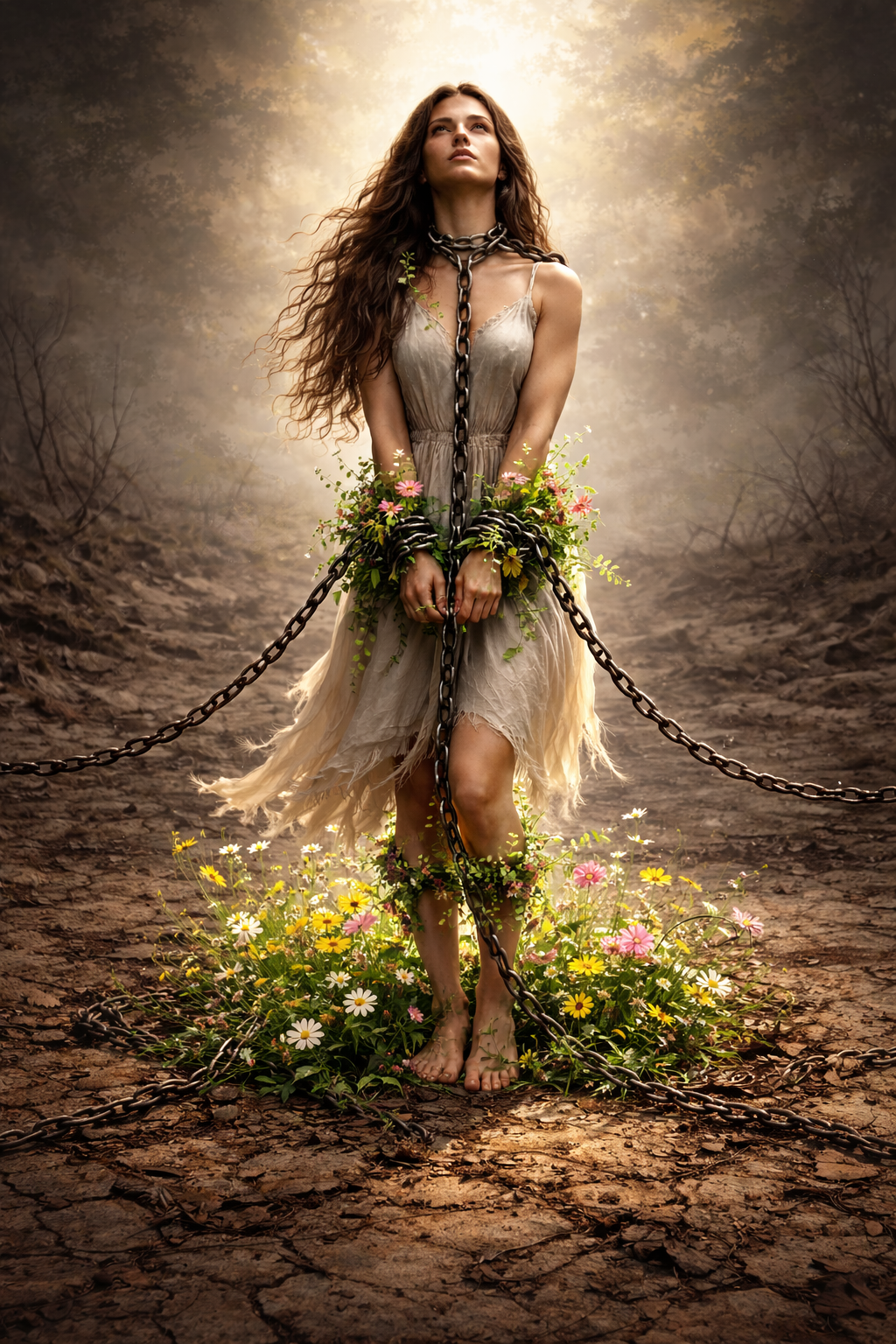
Tradition, Scripture, and the Making of Women’s Chains
A few years ago I was visiting with a young man at a party and the subject of politics and women came up. In no uncertain terms, this man shared his opinion freely and openly with me. He asserted that women were responsible for the state of the world at that time, specifically highlighting AOC as a problem figure. He pointed out that women should not have the right to vote nor should they be in the workplace.
In his view, granting women the right to vote was the beginning of the downfall of society, and a return to those traditional values was necessary. He stated with zero hesitancy that women should remain as stay-at-home moms and be taken care of by their husband, the rightful provider. His belief was that this was what women should want, and a good man would be happy to fill the provider role.
In his mind, this arrangement would fulfill both parties; he couldn’t understand why this would ever not be desirable. In addition to the supposed fulfillment, this was also the proper hierarchical order as God intended so that’s what we should all, of course, be doing.
The Sacred Justification of Women’s Suffering
A few years ago I was visiting with a young man at a party and the subject of politics and women came up. In no uncertain terms, this man shared his opinion freely and openly with me. He asserted that women were responsible for the state of the world at that time, specifically highlighting AOC as a problem figure. He pointed out that women should not have the right to vote nor should they be in the workplace.
In his view, granting women the right to vote was the beginning of the downfall of society, and a return to those traditional values was necessary. He stated with zero hesitancy that women should remain as stay-at-home moms and be taken care of by their husband, the rightful provider. His belief was that this was what women should want, and a good man would be happy to fill the provider role.
In his mind, this arrangement would fulfill both parties; he couldn’t understand why this would ever not be desirable. In addition to the supposed fulfillment, this was also the proper hierarchical order as God intended so that’s what we should all, of course, be doing.
When I say I was saddened it is an understatement. While I knew many within my culture and the culture at large hold those traditional values as dear — I myself value aspects of it — I had never heard somebody so brazenly promote the reduction of women’s rights. And if that is a requirement for the ‘return to traditional values,’ we need to reconsider whether there was ever any value at all.
In many ways, I was heartsick at this young man’s deeply held beliefs and the distorted lens through which he viewed the world. I understand how he came to this conclusion, but women’s rights were an uphill battle for centuries. Yet many are clinging to the now familiar patriarchal structure, one that requires hierarchy and a certain level of submission and dominance, rather than the hope of a more egalitarian experience, where both genders share equal value.
I’ve mentioned before that we often view history through rose-colored glasses. We adopt the narrative we want and disregard the dirty underbelly. In many ways, we’ve never even seen the dirty underbelly because we were not given the full history; we were given the narrative of one half of humanity and assumed the other half experienced the same.
But I’ve found the other side of history and it is as enlightening as it is minimal. The traditional values that are so often touted as the goal of a utopian society, with the hierarchy firmly in place where men and women slide seamlessly into their appointed roles, is a utopia that has never existed, nor ever will exist. Why? Because women will always question why they are the lesser sex and they will always seek equality.
And they should. Subjugation and suppression are two experiences that violate the very core of one’s soul. It doesn’t matter if this subjugation is written into canon or scripture, it doesn’t matter if it’s screamed from the pulpit or whispered in the ears of children, it doesn’t matter if murder is the result of pushing against it, every oppressed group will continue to push and seek to create for themselves the same rights that exist for the oppressor.
I’d like to explore with you the root of the traditional value system that denotes a clear hierarchy with women placed firmly beneath men. The most obvious place for the beginning of this value system is Genesis, where Eve was quite clearly set aside as the evil seductress and placed beneath Adam, to be his helpmeet, cursed with the desire to serve him. While I personally believe our rendition of this story is incorrect, the translation we have been given of this one story alone creates a division between men and women, teaching men that they cannot and should not trust their wife but to always be wary, and ensure she stays controlled and compliant, lest she rise and deceive him again.
This mentality was promoted many times throughout the ages, both scripturally and otherwise. Women’s subservience was referenced in the Law of Moses over and over as women’s experiences were referred to as ‘unclean.’ It was reiterated by this same law ensuring husbands that if they suspected their wife was being unfaithful, they could take her to the priests who would curse her with infertility. Never mind proof. Suspicion was enough. Women’s role was further entrenched when Jesus’s apostles declared women should be taught at the feet of their husbands and remain silent in the churches.
Aristotle, who we all know as one of the greatest philosophers of recorded history, believed women to be naturally inferior, a mutilated or deformed version of man. Women were, in his view, subordinate. Their emotions were a weakness and their mental capacities insufficient in comparison to men. Aristotle’s views largely impacted the framework of Christianity as it was formed over time, and have had a heavy influence in the shaping of Western culture. (1)
Beyond Aristotle, we have many Christian saints whose opinions on women and their position were quite clear.
Tertullian, 155-240 CE, in regards to women, “Do you not know that you are the devil’s gateway? You are the unsealed of that forbidden tree…on account of your desert — that is, death — even the Son of God had to die.” This links right back to the garden of Eden, where Eve became the first representation of women as the devil’s handmaidens. (2)
St. Augustine in the 15th Century, “even before her sin, woman had been made to be ruled by her husband and to be submissive and subject to him.” He also stated, “woman together with her husband is in the image of God…but when she is referred to separately to her quality of “help-meet,” which regards the woman alone, then she is not the image of God, but as regards the man alone, he is the image of God as fully and completely as when the woman too is joined with him in one.” (3)
There are more examples of women being villainized and diminished within the early Christian framework, but these will suffice. These ideals shaped Christianity and continued to shape the world for women as Christianity spread throughout the globe. Christianity is the example I am most familiar with, but it’s far from the only system whose roots rely on women’s subservience. Many, if not all, global cultures share a similar value.
When combing through history, it becomes evident that the subjugation of women had a clear starting point and was carried on through religious and cultural ideals, following a similar vein well into modern day. The gentleman I spoke with was merely the result of a system created thousands of years ago and perpetuated for millennia by those in power.
The traditional values we look back on so fondly are rooted in these beliefs that hold women as inferior beings whose bodies are meant for reproduction and whose minds are incapable of leadership and individuality. Well into the 1900’s, women were kept from education, leadership, and advancement due to these ‘traditional’ values.
In learning this history, I have to ask myself, are these traditional values actually valuable? Or are they simply what’s known and what’s comfortable for those who benefit the most from them?
Now the thing about that young man that I spoke to was that he was very right in his beliefs, very justified. This was the correct order of things and it is correct because it is biblical. He never considered the impact of these ‘traditional values.’
So let’s unpack them.
In the US, the Equal Credit Opportunity Act (5) was passed in 1974. This law made it illegal to require a husband or father’s signature when a woman was attempting to open a credit card. It also made it illegal to deny a woman credit based on sex or whether she was married. It made it illegal for the financial institution to ask the woman about pregnancy, birth control, or family planning. Up until this time it was perfectly legal to deny a woman credit for the lack of a male signature or because she may be considering having a family or already having children. Women —- married, single, divorced, widowed, gainfully employed, single moms — were routinely denied access to credit because they did not have a male co-signer.
The impact of this one lack of basic rights kept many women in unhealthy, abusive marriages. It created a barrier to women becoming self-sufficient and forced their reliance on men. Women couldn’t create a business without the help of a man. They paid more for many things because they had no credit history and were considered a ‘higher risk.’ Income disparity was inevitable. With no credit history or accounts, home ownership or rental was often impossible. Buying a car was impossible. Women had no recourse, no power, no options. The system forced women to live at the mercy of men then called it ‘traditional values.’
But let’s go back further. In the 1920’s women were finally given the right to vote. This was the beginning of the end of society as we know it, according to the man I mentioned at the beginning of this piece. And yet, this was simply the first time in history women were represented within the legal system. And the only representation they had was the right to vote. They were not yet holding political office.
Interestingly enough, when male American colonists were required to comply with laws made by a parliament that did not represent them, they rebelled. They started the Revolutionary War. They refused to comply when their voices were not being heard.
Those men were called heroes, courageous, powerful. They are revered for standing against such tyranny. They stood against a giant all for the sake of freedom. And yet, when a woman does it…how dare she! She’s violating God’s natural laws. She’s spitting in the face of the divine.
Well the American colonists stood against a king, a man who was believed to be divinely ordained. So they also went against God’s natural laws and spit in the face of the divine. But instead of being demonized by history, they have been elevated and made to be nearly gods themselves.
Women did nothing more than require equal representation and recognition that they are also a part of the human equation. In fact, without women, there are no humans. Our bodies carry all humans. It is through our blood, our sweat, and our tears that humanity survives.
But let’s go back to the late 1800’s before women had the right to vote. At this point in time, women were owned by their husbands, the church, or science. As I understand it, many didn’t even believe women had souls. They were property, a commodity to be used and, if desired, discarded. Women were frequently institutionalized for ‘hysteria.’ This barbaric practice continued well into the 1900’s. A man could institutionalize his wife for nearly anything. If women presented with symptoms of hysteria, which today has the label of PTSD, they were often put away for months, years, or even the remainder of their life.
Sigmund Freud, one of history’s great philosophers, began studying women with hysteria in the late 1800’s. For ten years he listened, observed, and utilized therapeutic techniques to promote healing (6). He listened as they shared their stories of rape, molestation, and abuse in many forms from childhood on. Story after story, woman after woman. He heard, he listened, he helped. The women began to heal, they improved, the hysteria diminished. But then Freud shut the program down. After ten years of believing women, he retracted his words. He declared they were delusional or lying because he couldn’t deal with the reality that the world he lived in caused mass amounts of trauma for women; he couldn’t face a world that hurt so many women so instead he retreated to his safe world where women were delusional, not abused. And why were they abused? Because they had no right to fight back. Because the cultural narrative surrounding women set them apart as naturally wicked, stupid, and defective. The dehumanization of women began in ancient history and continued for thousands of years, and yet Freud was surprised when abuse occurred within that framework.
For years we have promoted the patriarchal order as God’s order. It must be natural. It’s biblical. At the same time, feminism has been widely demonized. Women who stand up for themselves and others are Feminazis, bitches, violating the natural order, but history doesn’t share that narrative. The ‘natural order’ has been used as a tool to justify ongoing abuses of women.
If this is what it means to ‘return to traditional values,’ I want no part of it. Those are not my values. Nor are they the values of the men I love, respect, and honor for who they are and what they bring to this world.
According to Frederick Engels, it was the development of the state that relegated women to the existence of slave and servant. He states that, “the overthrow of the mother right was the world historical defeat of the female sex. The man took command in the home also; the woman was degraded and reduced to servitude; she became the slave of his lust and a mere instrument for the production of children.” (7) For many women, not much has changed.
The Creation of Patriarchy, Gerda Lerner, pages 206-209
The Creation of Feminist Consciousness, Gerda Lerner, pg 141
The Equal Credit Opportunity Act (https://www.justice.gov/crt/equal-credit-opportunity-act-3)
Trauma and Recovery by Judith Lewis Herman MD
The Creation of Patriarchy, Gerda Lerner, pg 22
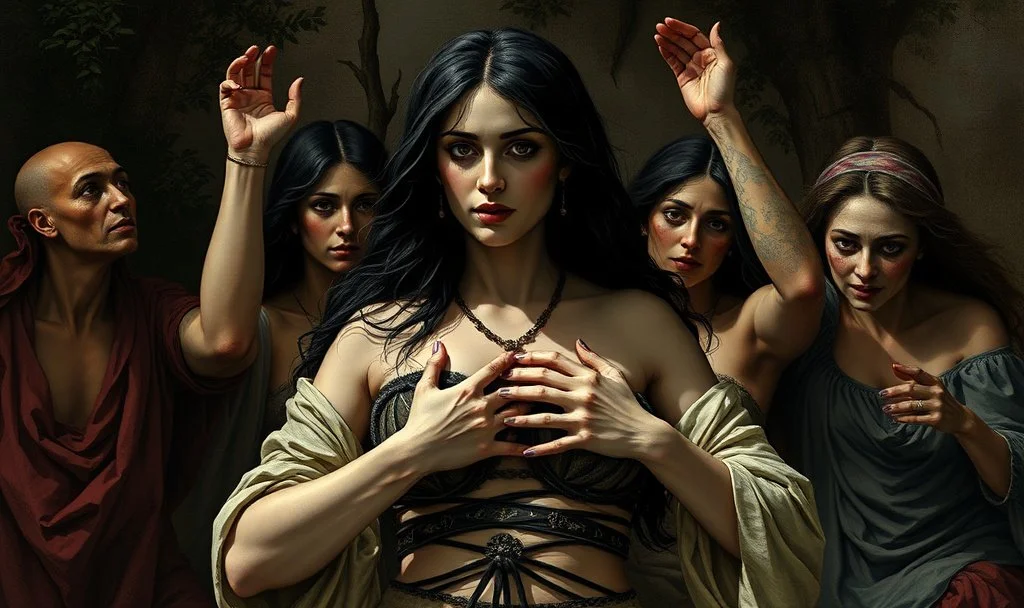
She Should Have Known Better
One of the core foundational elements of my religious framework was the belief that sex outside of marriage was a major sin. This was the kind of action that would have God toss you aside. But the funny thing is, while both men and women were taught to wait for marriage, damnation didn’t seem to wait for both parties.
Without overtly speaking the words, it is often made clear to women that the responsibility for not having sex is theirs; if a woman and a man choose to have sex, she will carry the scarlet letter. He is just a boy operating on his urges; he can’t help himself. But she? She should have known better than to make that choice.
The Ancient Roots of Women’s Sexual Shame
It was recently brought to my attention that a young man I know took it upon himself to berate a young, unwed mother for the disgrace of being an unwed mother. Apparently she is worthless and not worth loving because she had a child out of wedlock.
I had a lot of thoughts when I heard this story. Most of them were angry. Aside from the arrogance and self-righteousness that drove the belief that he somehow had the right to actively berate her, I decided to consider the foundation that established his role as judge, jury, and executioner.
I write a lot about religion and culture and how it drives society. While I cannot speak to the specific beliefs of either of the individuals mentioned above, I can speak to the overarching cultural and religious beliefs that likely shaped this moment in time; we all have a shared history, as it were.
One of the core foundational elements of my religious framework was the belief that sex outside of marriage was a major sin. This was the kind of action that would have God toss you aside. But the funny thing is, while both men and women were taught to wait for marriage, damnation didn’t seem to wait for both parties.
Without overtly speaking the words, it is often made clear to women that the responsibility for not having sex is theirs; if a woman and a man choose to have sex, she will carry the scarlet letter. He is just a boy operating on his urges; he can’t help himself. But she? She should have known better than to make that choice.
A woman’s virginity is purity, angelic, and valued by the most high God. Premarital sex is a violation of that and makes a woman unclean. Her future husband won’t want an unclean woman. Sure, he may have had sex before marriage, and maybe he was wrong for doing so, but, again, it’s not entirely unexpected if he made that choice. But a woman? How dare she! Losing virginity is like losing the right hand of God. Sadly, I know women who made that choice and were shamed and belittled while the men who willingly took their bodies carried it like a notch on their belt. The double standard is enraging.
Here’s the reality of a woman’s virginity: it is a commodity, a bargaining chip.
This was what I didn’t see or understand when I was a young girl of seventeen. I am going to say this again: a woman’s virginity is a commodity.
The belief holds true across my culture and many others that a woman somehow has more value because she has an unbroken hymen.
I remember wondering as a young teenager if my hymen had been broken due to no fault of my own. I’d heard it could happen. What would that mean for my status as a virgin? Did that make me not a virgin? Did that make me less of a virgin? I wouldn’t have known. The reproductive parts of my body were more foreign to me than God.
Me being me, I eventually found my way to history. Lo and behold my shock when I discovered the lies buried in the books I was originally taught from.
The concept of virginity began somewhere between five and ten thousand years ago. Originally, it was not a term used to define a woman’s sexual status but a term to define her completeness within herself as a woman.
In Greek mythology we have three goddesses — Athena, Artemis, and Hestia — who are known as the virgin goddesses. These ancient deities were considered virgins not because they had never had sex, but because they were their own, sovereign beings, unbeholden to any man. They did not require a man to fulfill their purpose or complete their value. For them, virginity was a representation of wholeness.
“a virgin is a woman who is “one-in-herself, does what she does — not because of any desire to please, not to be liked, or to be approved, even by herself; not because of any desire to gain power over another, to catch her interest or love, but because what she does is true…if a woman is one-in-herself, she will be motivated by a need to follow her own inner values, to do what has meaning or fulfills herself, apart from what other people think.” - Jean Shinola Bolen
According to Jean Shinoda Bolen in her book, Goddesses in Everywoman, a woman who is a virgin is a woman who is “one-in-herself, does what she does — not because of any desire to please, not to be liked, or to be approved, even by herself; not because of any desire to gain power over another, to catch her interest or love, but because what she does is true…if a woman is one-in-herself, she will be motivated by a need to follow her own inner values, to do what has meaning or fulfills herself, apart from what other people think.” (1)
Her virginity is the act of being true to herself rather than adjusting her psyche to fit the expectations of another.
Sue Monk Kidd states in her book, The Dance of the Dissident Daughter, that “in ancient times the word virgin had a different meaning than it does now. It didn’t mean being chaste or physically untouched. Rather, being a virgin meant belonging to oneself…[it is] a quality, a subjective state, a psychological attitude, not to be a physiological or external fact.” (2)
Both authors quote the work of Esther Harding, whom I have not yet read.
In looking back over ancient history, this belief is supported in the form of the matrilineal and goddess-centered societies that existed prior to the rise of patriarchy.
According to the theories and beliefs rising today after studying archeology, ancient texts, and any possible glimpse available into history, it is widely acknowledged that the matrilineal, goddess-centered cultures deeply honored the feminine, revered the female body for being the source of life, and held sex as a sacred experience.
Ample evidence exists to support the belief that the goddess was alive and well in her temples, represented by priestesses who honored and upheld her. Men and women seem to have existed in more of an egalitarian state, and both parties were free to experience the full scope of their sensuality and sexuality. Children born within these societies were recognized as the mother’s child, thus the genealogical line passed from mother to child.
What modern day history doesn’t tell us is that the demonization of sex, the rise of virginity as a method of commoditizing a woman’s body, and the suppression of women’s sexual appetites, was largely driven by ancient politics.
According to Gerda Lerner in her book, The Creation of Patriarchy, there was likely a time in ancient history where humanity shifted from an egalitarian people’s state, where the division of labor was shared proportionally between the sexes, to a hierarchical state due to the rise in agriculture and more complex societies. To facilitate this transition, women became commodities. According to Lerner, “the first appropriation of private property consists of the appropriation of the labor of women as producers.” She later goes on to state that, “…relatively egalitarian societies with a sexual division of labor based on biological necessity gave way to more highly structured societies in which both private property and the exchange of women were common. The earlier societies were often matrilineal and matrilocal, while the latter surviving societies were predominantly patrilineal and patrilineal. The more complex societies featured a division of labor no longer based only on biological distinctions, but also on hierarchy and the power of some men over other men and all women.” (3)
When she mentions that the labor of women was appropriated as producers, she is referring to the production of their physical labor (working the fields, cooking, etc.) as well as the production of their bodies…their children.
Controlling a woman’s offspring had a two-fold impact. The first was the growth of the tribe or city. More bodies = more production. The second was the utilization of the mother/child bond to link separate tribes to each other. Put another way, the women of conquered tribes were often impregnated which linked the conquerors to the conquered.
According to Lerner, “In the Inca empire the conquerors extended their rule by forcing conquered villages to provide virgins for state service and as potential wives for the Inca noblemen. This interference in the sexual and marriage patterns of the conquered served the dual function of undermining kinship structures and of singling out particular kin groups for alliances with the conquerors.” (4)
Dominating virgins for kinship alliance isn’t isolated to the Incas. The ancient Assyrians took the harems of the previous leaders when they were overthrown, as did the leaders of ancient Israel, when the “victor acquired the harem of the former king as part of legitimizing his claim to the throne.” (5)
As the shift from an egalitarian way of life gave way to the hierarchical, sexual dominance became the norm. Over time historical records support the theory that, “elite men thought of themselves as those who might acquire power over others, wealth in goods and wealth in sexual services, that is, the acquisition of slaves and concubines for a harem.” (6) Sadly, this way of thinking is alive and well in the modern world. Just look to Epstein for proof of this.
Hierarchy and dominance continued to evolve, with women being the first enslaved group due to the production of their bodies. Unfortunately, it didn’t evolve to a balanced state. Instead, it evolved in such a way that control over women’s sexuality deepened. Gerder states that, “women, under patriarchal [hierarchical] rule do not dispose of themselves and decide for themselves. Their bodies and their sexual services are at the disposal of their kin group, their husbands, their fathers. Women do not have custodial claims and power over their children. Women do not have ‘honor.’” (7)
This process of dominion over women took place over a wide span of time. By the time we get to the biblical period and more detailed recorded history, women’s sexual and physical enslavement was well established. But this leads us to the history that directly affected the aforementioned conversation of the young man berating the young woman for having a child out of wedlock. Biblical history has shaped Western culture for thousands of years; it is often referenced as justification for specific treatment of individuals who are ‘less than’ or ‘other.’
When we begin to read biblical history, it is immediately evident that women and their sexuality are problematic. The interpretations we’ve been given of the Garden of Eden show this quite clearly. The apple is widely recognized as a symbol of sexuality, and Eve is punished for her seduction. She is made to be Adam’s ‘helpmeet.’ This is a misinterpreted term but I won’t go into that here.
The judgment on women’s sexuality is highlighted repeatedly throughout the bible. The Law of Moses lays out women’s ‘uncleanness’ and impurity over and over, with punishments existing for a woman if her husband suspects (he does not need proof) that she was unfaithful. In one story, Judah’s daughter-in-law pretends to be a harlot so he would sleep with her and give her the child he promised; she went to the brothel she knew he frequented and veiled her face while he had sex with her. When she was discovered to be pregnant, he was ready to execute judgment until she produced proof that the child was his. His promiscuity was well known and accepted; hers put her life on the line.
David and Solomon both had hundreds of wives and concubines. Jacob and Abraham had multiple partners. In Sodom and Gomorrah, Lot was willing to throw his daughters out to be raped and killed by the manic men of the city to appease them so they wouldn’t continue to seek the men that were visiting him.
According to Lerner, “Hebrew men enjoyed complete sexual freedom within and outside of marriage…during the early periods the husband had free sexual use of his concubines and slave women. Virginity was expected of the bride at the time of marriage, and the wife owed her husband absolute fidelity in marriage.” (8)
In Hammurabic Law, which is the codification of ancient Mesopotamian law, “marriages were generally monogamous, but the men were free to commit adultery with harlots and slave women…As for her sexual obligations, the bride’s virginity was a condition for marriage, and any marriage arrangement could be cancelled if she was found not to be a virgin.” Marriage was, essentially, the purchasing of a wife. (9)
Both Hammurabic and the Law of Moses go into great detail on the policing of women’s sexuality and her virginity. Those laws may be ancient but they set the precedent for women’s sexuality to shift from something that was honored and revered to something that was wicked and sinful. Coding it into religious law was the icing on the cake for social customs that were really about control and domination. Naming God as the reason didn’t make them less problematic; it just made them more widely accepted.
The more I learn about ancient history the more I realize we are living in a system built on ancient customs, and most of us never question why or how we got here. The young woman had a child out of wedlock. That’s what happened. The judgment came from somebody else. His belief that he had the right to judge her and condemn her for that choice was rooted in ancient customs and ideologies that reduced her value from a person to that of child-bearer for a husband that does not, but may possibly in the future, exist. Her autonomy and value is, therefore, linked to a potential male partner. On her own, she is less.
The question I am asking is not how we got here, but how we have accepted these double standards, the dehumanization, and diminishment of half the human population as coming from God?
Goddesses in Everywoman, pg 36
The Dance of the Dissident Daughter, pg 247
The Creation of Patriarchy, pgs 52 and 53
COP, pg 58
COP, pg 70
COP, pg 75
COP, pg 80
COP, pg 170
COP, pg 113 and 114
Standing on the Backs of our Mothers
Inheritance, Freedom, and the Choice to Rise
It’s 2026 and millennial women like myself are the first generation of American women to experience, as a whole, life with the cage doors open instead of slammed shut. I won’t say that women have experienced true liberation; they haven’t. There are a lot of reasons for this, but I’m not going to go into them today. What I am going to go into is the opportunity that exists for us that did not exist for the many of the women that came before us.
And I’m going to add a caveat: legally, these opportunities are now available. But in many cases, culturally and societally, they are not.
In 1969 California was the first state to legalize no fault divorces. This means that my mother was a young girl when an American state began to address the issues surrounding the divorce process and people being locked into unhealthy marriages. Before this, divorce required that the party requesting divorce prove that the other spouse was ‘at fault’ for the dissolution of the marriage. Common at fault complaints could be adultery, excessive cruelty, abandonment or neglect, drunkenness, or fraud. But this fault had to be proven, so divorce was difficult and costly. My state of Utah wouldn’t follow suit until 1987. And New York wouldn’t finalize this law until 2010.
At this same time, legally most women were not in a position to provide for themselves financially due to discriminatory practices within the national financial and employment systems. So if a woman was in a problematic marriage, she had to find a way to provide for herself if she left while the system was designed to ensure she could not.
In 1974 the Equal Credit Opportunity Act was passed, which finally made it illegal for financial institutions to withhold credit cards, bank accounts, and loans on the basis of gender. Until this time, these institutions often required the signature of a male counterpart — father, husband, or brother — to extend credit or financial resources, including a bank account, to a woman.
Marital laws locked men and women both into marriages that may or may not have been functional, and were often abusive, while financial laws ensured extreme difficulty for the woman if the marriage dissolved.
I said before that Millennial women are the first generation to have the cage doors opened. And this is because of culture. Though the laws began to remove barriers to women creating lives that they felt empowered in, culture did not catch up initially. In many ways, culture still has not caught up.
The generations before me — my mother, my grandmother — were still locked in the cultural narrative of defined gender roles. The father was the spiritual head of the home and financial provider. The woman was the nurturing force within the home, she bore and raised children, and she kept the home orderly. In my mother’s case, she also did plenty of odd jobs to add a little extra income to the family finances, which was also quite common.
Culturally it was acceptable for a woman to help provide financially but if she were to build a career, there would have been talk. I cannot speak to a single woman in my life that I was close to that had a career or was financially capable of taking care of herself in the event of a divorce or her husband’s demise. The women I knew that did have full time jobs also birthed child after child and somehow managed to maintain the home as well. Their husbands did not hold down consistent jobs. These men were fine with the wife managing literally everything. Yet they were still the head of the household and the women were still required to defer to them as the leaders.
So though the laws were beginning to open up the possibility of freedom for women, because culture didn’t support that, many women found themselves ‘free’ while still enslaved. Those that worked 40 hours a week like the men were still required to fulfill all the wifely duties expected of them while their husbands were free to do as they wished. Those that didn’t work were expected to follow his rule and his directives. The women were meant to listen and follow. I will say, gratefully, that my parents disagreed with the suppression of women, and as a result they made sure I knew how to access my voice.

The experiences of the women I know aren’t an isolated piece of my culture. They were part of American culture at large. This is why I say we are the first generation of women with the cage door open. We’re the first with the opportunity to fly. The wings of the generation that should have been able to fly were still clipped and for millions of them, their cage was still locked.
I have had the privilege of working with women who broke the cage open, and I tell you there is no greater privilege. I have seen them face their demons and push against culture that tells them no. I have seen them stand and fight for others and bleed themselves dry to make this world better. I have witnessed as they broke through years of conditioning, shifted their entire way of being, tapped into the deepest wells of strength to keep going when it would have been so much easier to stop. I have stood shoulder to shoulder with greatness — with their feminine power rising to shatter their cages. The more I learn, the more I understand how high the mountain was that they had to climb to create what they’ve created.
And now it falls on us. We are the first women in American history that have the opportunity to shatter every glass ceiling. We are the first that have the ability to reject abuse and cultural narratives that require our diminishment for the comfort of the system. We are the first generation of women that has the power to change the entire narrative both historically and moving forward and make a better world for our children and grandchildren.
Our generation, men and women alike, are the first in American history as a whole that has the opportunity to completely change the way marriage and relationships function as a whole, which in turn can massively shift society. It’s on us to choose whether we embrace personal growth, responsibility, and healthy relationships to ourselves and others, or whether we continue to outsource our beliefs of ourselves and the world to people that make the claim they know more than we do.
I’m here to tell you the people that make that claim are wrong. Their beliefs of you don’t replace your intuition, your gut instinct, your intuitive guide and that connection to Source that exists within you. They do not get to position themselves between you and your God, your nervous system, your body, or any other thing that belongs solely to you.
They are not the authority over your life.
You are.
And for the first time in history, you can be. So to the women of my generation, we are standing on the backs of our mothers and grandmothers. We are living in the world the women before us fought for with their blood, their bodies, and their tears.
Where will we carry this?
How far will we rise?
The Birth of a Soul
It all begins with an idea.
I want to say it began with something that shook the world, but it didn’t, not in the way one would think. It didn’t shake the rest of the world, but it shook her world, and that’s all that matters, isn’t it?
It began with the birthing of a soul – her soul. The birth wasn’t easy. It was, in fact, the most painful experience she’d ever had, in every way imaginable. Physically, she fought for every breath, she stumbled on shaky legs and fell to her knees aching for release, but forced herself up again to push through the crowning, to push through the agony, to give it all for the new life coming from her. Emotionally, her world crumbled, and she watched while all she knew herself to be evaporated in front of her – she watched it, she cried, and she held on to life because something greater was coming. Spiritually, she surrendered, but that surrender didn’t come easily. No, it came when she accepted that it was the end, that she would not – could not – survive this process.
That is the birth of a soul. It is born with blood, sweat, and tears. And with every birth comes a death.
The soul that rises into the unknown of a new life must look back at the old, look back and recognize the strength and pain that had to be endured in order for that soul to exist. It must acknowledge and honor the one that persevered, that cried, wept and gave everything for the life of that soul.
Because, you see, that woman gave all that she was for that soul to live. Everything that woman knew, everything she had been, and everything she hoped to become, had to die in order for the soul to rise.
The greatest sacrifice was given in the hopes that the being rising from the ashes would look back and honor the sacrifice, honor it and become something greater, something far more expansive than the woman ever hoped to be. That the life sacrificed would be worth the pain, in the end, and the birth would be enough to change the world.
So while the world did not shake at the birth of this soul, the ripples may get stronger as they go, and in the end, who knows. Maybe it will shake the world.

The Breath of Remembrance
A poem for my beloved Grandpa
In the stillness of the morning a breath -shaky, perhaps - and final.
It seeps out - a sigh, a whisper, a goodbye.
The breath of life does not leave with the strength of a hurricane. It leaves quietly, a gift to the morning stillness. It is the breath of completion, the time of goodbye, and yet it is so much more.
The final breath is the breath of remembrance.
It does not dissipate into the stillness. It sprouts wings and takes flight.
It whispers into the ears of lovers and friends, children and neighbors, companions, loved ones, progeny.
Remember, it says.
The soul is free, the light unbound.
Remember,
The life, the steps, the journey.
Remember.
And the breath whispers into the ears, sharing the memories.
Some will remember the pillar of greatness that rose like a beacon, giving direction and hope to those who were lost.
Others will remember the light shining, a torch in the darkest of nights lighting the way home.
For some, it will be love they remember; they’ll smile at the soul peering out from beautiful blue eyes that were more window than eye. This soul saw only the truth. In return, they saw the truth, too. The gift of this soul is his ability to peer through one’s darkness and find the light. Many will remember the love of his soul breathing light back into their life.
Still others will remember the words, the prayers, the faith and conviction, the knowing that we are loved, that we are upheld, that there is a God and he is ours to commune with.
So many memories whisper on the final breath, many that show the path, inspire the life, and still others that are much simpler but beautiful all the same.
The smiles.
The acceptance.
The love.
But one can’t forget the snows and sleds, tractors and campouts, and blue jumpsuits worn only when working.
The memories speak of another whisper, the whisper of wind through pines planted by his own hand, pines that grew taller and taller - trees to measure a life.
Most will remember snow cones and popcorn, and great summer barbecues.
And for the lucky? They’ll hear the breath as it whispers reminders of Christmas, pajamas, and jubilant carols. They’ll see a vision of a man singing wholeheartedly, surrounded by children all clamoring for his lap.
Yes, the final breath is the breath of goodbye,
but it carries with it the gift of remembrance,
And it is a beautiful gift indeed.

A Love Letter to My Body
I have some things I want to say to you, and I believe they are things you need to hear. So take them to heart, because they are words that I have never said.
I have some things I want to say to you, and I believe they are things you need to hear. So take them to heart, because they are words that I have never said.
In my journey through life I have had many experiences, each laced with a million emotions. I have laughed and I have wept. I have smiled and I have sobbed. I have held myself together with nothing more than my arms and determination in my heart, and yet those same arms have held the new life that you, my body, gifted me with your incredible strength and tenacity.
I have stumbled physically, emotionally, and spiritually, yet every time I rise again and I demand that you rise with me, that you rise and face the storm on legs willing to walk into the battle, with arms holding the shield in one hand and my banner, my vision of the world, in the other.
Together, we have walked through the fires of hell, taking shaking, trembling steps, knowing that hell cannot last forever. Every step of the way, you did not falter. When I stumbled, you would not let me fall. When I tried to lie down and give up, you urged me forward, just one more step forward.
You have persevered through the blood, sweat, and tears of childbirth; you have felt the agony as you pushed a new being into this world, and you have felt the hollowness of an empty womb and the incredible weight of empty arms, arms that should have held your child, but never got the chance.
You hurt, you suffered with me and for me, you experienced weakness and pain and agony and yet you did not falter; you will not falter. Each day, you wake, you rise, and you stand and face the world, the pain, the adversity. You face it all and you do not quit!
And yet, despite the strength you have shown, despite the courage and the grit, I have never seen what you really are. I’ve never stopped to look and listen to what you are telling me. I’ve never paused long enough to hear the words that you would say, if I would give you a voice. Your words might tell me that you harbor the pain of our experiences, too. Your words might speak to the life that we have gone through together, and the loneliness – yes, maybe even the betrayal – as I pile resentment upon you for what I perceive to be failures.
Yes, I cling to anger at the failure of my womb, and I look in the mirror and see a woman whose body is showing the scars, the marks of her experiences; instead of seeing the beauty in the imperfections and of acknowledging the battles we have fought together, I demand perfection, demand you be something you ought not to be. Instead of allowing you to rise, powerfully, to stand as the woman who has faced the storm, I demand you be the woman who hasn’t walked through hell, the one that existed before hell came, as if you shouldn’t show the scars of all we have fought.
I will do this no longer.
No more will I demand perfection.
No, I will honor you as you have honored me and when we rise now to face the storm, we will rise and we will lift our banner to the world, and it will be scarred, imperfect, and glorious. Because, by damn, we have earned those imperfections.

Feminine Archetypes - myths to restore the feminine to her divine center
It all begins with an idea.
We live in a world where the divine has a large, powerful presence in almost every culture. Probably every culture.
Though I don’t know the number of people that exist within each religion, it’s safe to say that globally there are three religions with a substantial impact: Christianity, Judaism, and Islam.
Each of these religions has their roots in biblical origins. Each of them is very patriarchal and driven by a masculine God and a masculine system and has very clear roles for women. Because these religious ideologies have their primary focus on the masculine, there is a huge missing for women. I didn’t even have language for it until I was gifted a book by Sue Monk Kidd titled The Dance of the Dissident Daughter. This book was the author’s discovery of the divine feminine in her own life.
I almost cried many times reading this book. I felt seen. Somebody else had lived my same spiritual life and they’d found the language to understand it.
As humans we need stories to orient ourselves around. We need something greater than ourselves to aspire to. But in my religious culture, which has its roots in biblical teachings, there were no stories for me. There were directives, orders, expectations, laws, and an overarching theme of unquestioning obedience, but nothing to help me understand who I am as a woman.
I have spent countless hours studying and learning about the divine feminine. I’ve learned about her history and the erasure of her from history. I’ve learned about her power and where that power was lost. And I’ve learned that there are stories for me, beautifully woven myths about feminine archetypes and what they have to teach me as a woman.
an image of goddesses embodying the feminine archetypes of wisdom, independence, mother, maiden, and warrior
The most common archetypal image we see is Mary with the Christ child, a beautiful image to be sure and a powerful archetype if you understand the full scope of the story behind the story. But most of us aren’t taught that. Mary is venerated as the go-between for man and God. She is God’s wife and Christ’s mother. She is the virgin who gave birth. But who is Mary, really? As an archetype, a person, or a deity?
While asking the question of Mary, I have to ask the same for the others: who are Artemis, Athena, Persephone, Demeter? Who is Lilith and who is Eve?
In my culture, the answer is as follows:
Mary, mother of Christ and the virgin who gave birth to divinity.
Artemis, Athena, Hestia, Persephone, Demeter – all myths, all no longer worshipped. Their stories exist but are no longer relevant.
Lilith, largely unknown but originally the first wife of Adam turned demon.
Eve, the deceived woman who caused the fall of mankind.
All of these characters have archetypal relevance for women but history has changed or minimized their stories such that we’ve lost the archetypal elements. Yet there is so much for women to learn from these ancient stories of female goddesses!
Athena, Artemis, and Hestia are considered virgin goddesses. Culturally we would assume this to mean they were goddesses who never had sex, but that is not actually the case. In the Greek culture at the time these goddesses were worshipped, their virgin status had little to do with their intimate relations. A virgin, at the time, was a woman who was one in herself. She was a whole woman who knew her worth and her power and owned both, whether or not she had sex; these goddesses did not need men to be whole. Archetypally they are a reminder for women to embrace and develop sovereignty within themselves and become whole in their own right.
Aside from their status as virgin goddesses, they each had their own archetype associated with them. Athena is well known as the Goddess of wisdom. Jean Shinoda Bolen defines her as, “the pattern followed by logical women, who are ruled by their heads rather than their hearts. She shows that thinking well, keeping one’s head in the heat of an emotional situation, and developing good tactics in the midst of conflict, are natural traits for some women. Such a woman is being like Athena, not ‘acting like a man.’” She is the archetype for women who thrive in business, who rise to the top as CEO’s, who work well in the ‘man’s world’ of logic and analysis. She is one aspect of femininity, and an important one.
Artemis is the Goddess of the Hunt and Goddess of the moon. As an archetype she embodies the independent feminine spirit. According to Bolen, “the archetype she represents enables a woman to seek her own goals on terrain of her own choosing.” In addition, she was a protector of women and children. The Artemis archetype finds fulfillment in seeking her own interests and pursuing her passions without needing the masculine approval or encouragement. Her identity is based on sovereignty within herself, her own confidence, and her own achievements. Many Artemis women also find the need to shift social injustices and be a voice for the voiceless.
Within the last century, Artemis and Athena have gained power as archetypes and are being embodied by millions of women across the globe. However, this is a fairly new cultural phenomenon. For millennia, the archetypes of Hestia, Hera, Demeter, and Persephone were the most widely accepted while those of Artemis and Athena were shamed and diminished. However, all of the archetypes are important facets of femininity as a whole.
So now we come to Hestia. She was Goddess of the hearth and house. At the time of her worship, Hestia’s presence was a key component of everyday life. She provided warmth and wholeness to the home. When a woman embodies the Hestia archetype, she has a sense of intactness and wholeness on her own. Her archetype is often found in women who find meaning and fulfillment in keeping house. Bolen says that, “with Hestia, hearthkeeping is a means through which a woman puts herself and her house in order. A woman who acquires a sense of inner harmony as she accomplishes everyday tasks is in touch with this aspect of the Hestia archetype.” She often goes internal in meditation or prayer to maintain that wholeness. Hestia uses intuition as guidance and trusts her own inner knowing. Hestia women have an energy I would describe as a ‘knowing stillness.’ Somehow they remain grounded even when chaos reigns.
Then we shift to the vulnerable goddesses. These goddesses were taken advantage of or harmed by the male gods in their mythological stories, but they embody powerful feminine archetypes that we all exist within today. These seem to be the most widely accepted and encouraged feminine archetypes. These goddesses include Hera, Demeter, and Persephone. Archetypally they are wife, mother, and daughter. Hera, the wife. Demeter, the mother. Persephone, the daughter.
Bolen writes that Hera as, “the Goddess of Marriage was revered and reviled, honored and humiliated. She, more than any other goddess, has markedly positive and negative attributes. The same is true for the Hera archetype, an intensely powerful force for joy or pain in a woman’s personality.” The Hera archetype represents a woman’s yearning to be a wife. We see this in young maidens (another archetype) who can think of nothing else but getting a husband. When embodying Hera, the maiden feels incomplete without a mate or partner in life. Bolen goes on to state that when a Hera archetype is embodied, a “bride may feel like a goddess on her wedding day. For her, impending marriage evokes the anticipation of fulfillment and completeness, which fills her with joy.” The Hera archetype is largely celebrated and encouraged culturally. Growing up, becoming a wife and mother was the one singular goal I had. It was the God-ordained path for all women and one I enthusiastically followed. Many women find immense joy in rooting into the Hera archetype and embracing all that it is to be a wife.
After becoming a wife, mother is often the next step so we come to Demeter, the Mother archetype in Greek mythology. We must also look at Persephone – the daughter – as the archetypes are linked. Demeter was the Goddess of Grain and caused the world to flourish. Persephone, her daughter, was kidnapped and taken to the underworld by Hades to be his wife, an act which was sanctioned by Zeus. Grieving her lost daughter and betrayed by Zeus, Demeter refused to act as Goddess of Grain and thus nothing would grow. The fruits of the earth were her domain and she withdrew her power. Eventually Zeus recognized the error of his ways and implored Hades to return Persphone. Hades did, but not before tricking Persepone into eating three small pomegranate seeds. Persephone didn’t know that eating the seeds would bind her to the underworld. Because of these seeds, she was allowed to spend two thirds of her time with her mother and then forced to spend her remaining time in the underworld with Hades.
During the time Persephone spent with Demeter, life flourished and the fruits and bounty of the field grew. But when Persephone was with Hades, that power was removed and the bounty of life faded as Demeter wrapped herself in depression and grief. As an archetype, Demeter is the maternal instinct that is “fulfilled through pregnancy or through providing physical, psychological, or spiritual nourishment to others.” She embodies caretaking and love rooted in caregiving. Bolen states that “this powerful archetype can dictate the course a woman’s life will take, can have a significant impact on others in her life, and can predispose her to depression if her need to nurture is rejected or thwarted.” As an archetype, Demeter is powerful. When women feel the pull to motherhood, it is Demeter’s archetype they embody. Speaking back to the archetypal image of Mary and the Christ child, it is the mother or nurturing archetype of the feminine psyche that is invoked.
Naturally, we must look at Persephone as an archetype as well, as she is both daughter to Demeter and now Queen of the Underworld. A powerful archetype indeed.
As the daughter, Persephone embodies the maiden, part of which includes the maiden’s naivety which enables her to be swayed and molded by others. The maiden rarely knows who she is and must discover herself over time through the experiences of life. We see this archetype represented in Clarissa Pinkola Estes’ book The Women Who Run with the Wolves. Her story of Bluebeard is a wonderfully woven story of a maiden gaining awareness and becoming a new archetype. But Persephone is also Queen and she becomes the guide for others navigating the underworld. The Underworld could represent many things. Maybe it’s the repressed emotions and feelings we were taught to hide. Maybe it’s fears and dreams, hopes and passions we were told were too big or impossible. Maybe it’s one’s own darkness or the deepest buried truth that we fear the most. Regardless, she becomes that which helps the soul navigate the darkness.
Interestingly enough, in the Christian world we have The Black Madonna, another divine feminine archetype who grounds the soul in light and helps them navigate the darkness. I would argue that she is a clear parallel to Persephone.
Persephone’s archetype is fascinating. She begins as a maiden and becomes a Queen, guiding others on their own soul path. In my opinion, she is a beautiful representation of a maiden developing awareness and gaining clarity on who she is and/or what she’s becoming. Maybe it was the maiden’s pain that brought her to it, as Persephone’s was, but eventually she can become a Queen.
There are many Greek goddesses and they all embody a different aspect of the feminine. Their myths are there for us to learn from and develop ourselves inside of. Historically, they were worshipped but they were not separate from humanity. They were in humanity and humanity was in them. Goddess was internal and external; she was that which one could aspire to.
Shifting away from the Greek goddesses, we have Lilith and Eve. Both are considered wives of Adam, the first man, and both embody a different aspect of the feminine archetype.
In Lilith’s myth, she was the first wife of Adam. While she’s not a common piece of religious history, the archetype does exist, though the origin of her story seems to be controversial. According to the most widely accepted version, she was created from the dust of the earth alongside Adam. As they were equal, she demanded equality and he required submission. Refusing to submit, she\ left then was cursed for leaving. I have done very little research on Lilith but I did stumble upon a reddit thread that identified her story as satire. Regardless of her origins, she has archetypal qualities we can learn from. She embodies the fierce, fiery feminine that refuses subservience. She will fight at great cost to retain her independence and recognition as an equal part of the whole. I wonder how many of the suffragettes that fought for women’s right to vote a hundred years ago had Lilith’s fire in their veins. She may also serve as an archetype for the more sensual sides of feminine nature – eroticism, sexuality, and rage among them – aspects of feminine nature that are widely suppressed and rejected, even demonized, as was Lilith.
Eve is another powerful archetype and one that has shaped women’s experiences for thousands and thousands of years. While the Greek goddesses and Lilith had their moment in history, Eve is still the reigning archetype of today, as she is the only one widely considered to be more than myth. To many, she is both history and myth. Archetypally, she embodies many aspects of femininity. From curious maiden, to companion, to mother, to seeker of wisdom and bringer of death. Her story arcs through them all. But ultimately, Eve is considered in Western culture to be the first mother, the primal mother from whom all life flowed. Archetypally, it could be argued that she is more of a balanced feminine than the previously mentioned goddesses, because her story includes curiosity, intuitive guidance, companionship and submission, motherhood, loss of innocence and the gaining of knowledge. In addition, she also archetypally carries the qualities of deceit, seduction, disobedience and sexuality.
What is interesting to note about Eve, and about Mary who I previously mentioned as the reigning symbol of the feminine archetype, is that both women have their stories rooted in a history that happened long before Genesis.
The original female archetype was Goddess, and she was a whole, complex embodiment of the entire scope of femininity. Her name was Gaia, Great Goddess, Isis and many other names. 30,000 years B.C. she was the bird Goddess. In some stories she was sacrificed and buried then life sprang from her bones. Others have similar qualities to Mary, Mother of Jesus, in the concept of the virgin birth. Many cultures have her there at the creation of the world. Some have a garden of Eden equivalent where the goddess was honored rather than diminished.
So while we have aspects of the whole feminine in the different goddess archetypes of Artemis, Athena, etc., a worthy goal of the feminine would be to stitch herself together in the form of the original goddess. That is, to become whole herself where all archetypal aspects are balanced and accessible whenever they are needed. The beauty of all of these myths and stories is that they are stepping stones women can follow to begin unlocking the mystery of who they are. They show the truth through myths of what can be unlocked when a woman stops asking outside sources to define her, and instead starts asking herself — her divine soul — how she wants to be defined.
Sources: Goddesses in Everywoman by Jean Shinoda Bolen
Goddesses: Mysteries of the Feminine Divine by Joseph Campbell
The Women Who Run with the Wolves by Clarissa Pinkola Estes
The Language of the Goddess by Marija Gimbutas